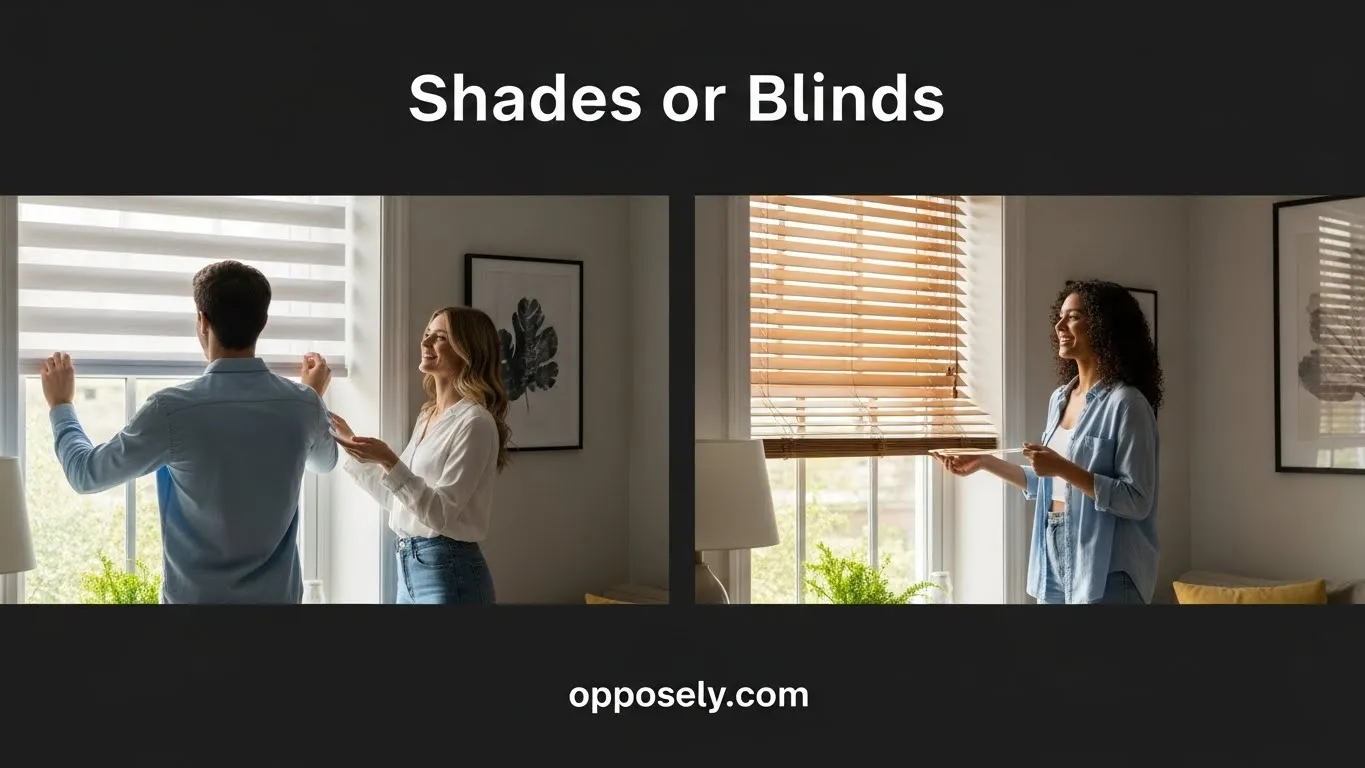
Have you ever walked into a store or browsed online and wondered whether to buy shades or blinds for your windows? You’re not alone.
Many homeowners, renters, and interior designers get confused because both options control light and provide privacy, but they function differently.
People search for blinds or shades because choosing the wrong option can affect comfort, aesthetics, and energy efficiency in a room. Some prefer shades for a soft, clean look, while others prefer blinds for flexibility in light control.
Understanding the difference helps you make informed decisions for your home, office, or any space.
In this article, we will explain what shades and blinds are, their types, materials, advantages, disadvantages, common mistakes, and tips to choose the best option for your needs.
By the end, you’ll confidently decide between shades or blinds.
Shades or Blinds: Quick Answer
| Feature | Shades | Blinds |
|---|---|---|
| Structure | Single piece of fabric or material | Multiple slats or panels |
| Light Control | Filtered light, less flexible | Adjustable light via slats |
| Privacy | Moderate to high | High, adjustable |
| Appearance | Smooth, clean look | Textured, layered look |
| Cleaning | Usually easier | Slats need dusting |
| Cost | Affordable to mid-range | Mid-range to higher depending on material |
Example:
- Roller shades in the living room for a clean modern look.
- Wooden blinds in the office to control sunlight precisely.
What Are Shades?
Shades are window coverings made from a single piece of fabric or material that rolls, folds, or slides up and down. They provide a smooth, modern appearance and can be made from light-filtering, blackout, or decorative fabrics.
Types of Shades:
| Type | Description |
|---|---|
| Roller Shades | Roll up neatly at the top of the window |
| Roman Shades | Fabric folds into pleats when raised |
| Cellular Shades | Honeycomb structure for insulation |
| Solar Shades | Reduce glare and UV rays while preserving outside view |
Advantages of Shades:
- Soft, clean, and modern look
- Can be blackout or light-filtering
- Easier to install and operate
Disadvantages:
- Less flexible for precise light control
- Fabric can collect dust
- Not ideal for very large windows unless custom-made
What Are Blinds?
Blinds consist of horizontal or vertical slats that can be tilted to control light, privacy, and airflow. They can be made from wood, faux wood, aluminum, or PVC. Blinds offer versatility in controlling sunlight and can complement many interior styles.
Types of Blinds:
| Type | Description |
|---|---|
| Venetian Blinds | Horizontal slats made of wood, aluminum, or plastic |
| Vertical Blinds | Vertical panels for large windows or sliding doors |
| Mini Blinds | Narrow horizontal slats, often aluminum |
| Faux Wood Blinds | Imitate wood at lower cost and are moisture-resistant |
Advantages of Blinds:
- Adjustable light and privacy control
- Durable and long-lasting
- Suitable for large or awkwardly-shaped windows
Disadvantages:
- Can be harder to clean
- May appear less soft and decorative than shades
- Installation can be more complex
Material Comparison
| Material | Shades | Blinds |
|---|---|---|
| Fabric | Most shades use fabric (light-filtering or blackout) | Rarely used in blinds except hybrid types |
| Wood | Limited in some Roman shades | Common in Venetian or faux wood blinds |
| Aluminum | Rare | Common in mini or Venetian blinds |
| PVC / Vinyl | Occasionally used | Common in moisture-prone areas like kitchens or bathrooms |
Which Should You Use?
Choosing between shades or blinds depends on your priorities:
| Priority | Recommended Option |
|---|---|
| Soft, modern look | Shades |
| Adjustable sunlight | Blinds |
| Insulation | Cellular shades or thicker blinds |
| Easy cleaning | Roller shades or faux wood blinds |
| Budget-friendly | Basic roller shades or mini blinds |
Tip: Many designers combine shades and blinds for layered functionality, such as cellular shades with wooden blinds for privacy and insulation.
Common Mistakes:
| Mistake | Correct Approach |
|---|---|
| Using blinds when you want a soft, smooth look | Choose fabric shades instead |
| Installing shades without measuring accurately | Always measure your window width and length precisely |
| Choosing the wrong material for the room | Use moisture-resistant materials in kitchens and bathrooms |
| Ignoring light direction | Consider how sunlight enters your room when choosing opacity or slats |
| Overlooking maintenance | Know if the material is easy to clean and maintain |
Everyday Life
| Context | Example |
|---|---|
| Living Room | Roller shades for minimalist design |
| Bedroom | Blackout cellular shades for privacy and sleep |
| Office | Venetian blinds to adjust sunlight for computer screens |
| Kitchen | Faux wood blinds for moisture resistance and easy cleaning |
| Hotel | Layered shades and blinds for aesthetics and functionality |
Tips for Choosing Shades or Blinds
- Measure your windows accurately – Don’t rely on standard sizes.
- Consider room function – Bedrooms may need blackout shades; offices may prefer adjustable blinds.
- Material matters – Fabric, wood, aluminum, or PVC have different aesthetics and maintenance.
- Think about style – Shades offer a soft, modern look; blinds offer traditional, textured appeal.
- Budget wisely – Shades are often more affordable; blinds can range higher depending on material.
- Layering – Combine shades and blinds for insulation, privacy, and style.
- Child and pet safety – Consider cordless or motorized options to prevent accidents.
FAQs:
1. Can I use shades and blinds together?
Yes. Layering can improve light control, insulation, and style.
2. Which is easier to clean, shades or blinds?
Shades are generally easier; blinds require dusting each slat.
3. Are shades or blinds better for privacy?
Blinds provide adjustable privacy; blackout shades offer complete privacy.
4. Can blinds fit large or sliding windows?
Yes. Vertical blinds are ideal for large windows and sliding doors.
5. What is better for energy efficiency?
Cellular shades provide insulation; thicker blinds also help reduce heat loss.
6. Are shades more modern than blinds?
Yes. Shades offer a smooth, minimalist look, while blinds have a layered or textured appearance.
7. Can I motorize shades or blinds?
Yes. Many shades and blinds can be automated for convenience and safety.
Conclusion
Choosing between shades or blinds depends on your needs for light control, privacy, style, and maintenance.
Shades provide a smooth, modern look and work well in bedrooms and living rooms, while blinds offer flexibility, durability, and precise sunlight adjustment.
By considering window size, room function, material, and aesthetic preferences, you can select the right option confidently. Layering shades and blinds is also a smart choice for ultimate control.
Understanding blinds or shades ensures your home looks stylish, functions well, and meets your everyday needs.
Read More:
Wilful or Willful: Meaning, Origin and Examples
Biannual or Biennial: Meaning, Examples and Mistakes
Ph.D or PhD: The Professional Choice