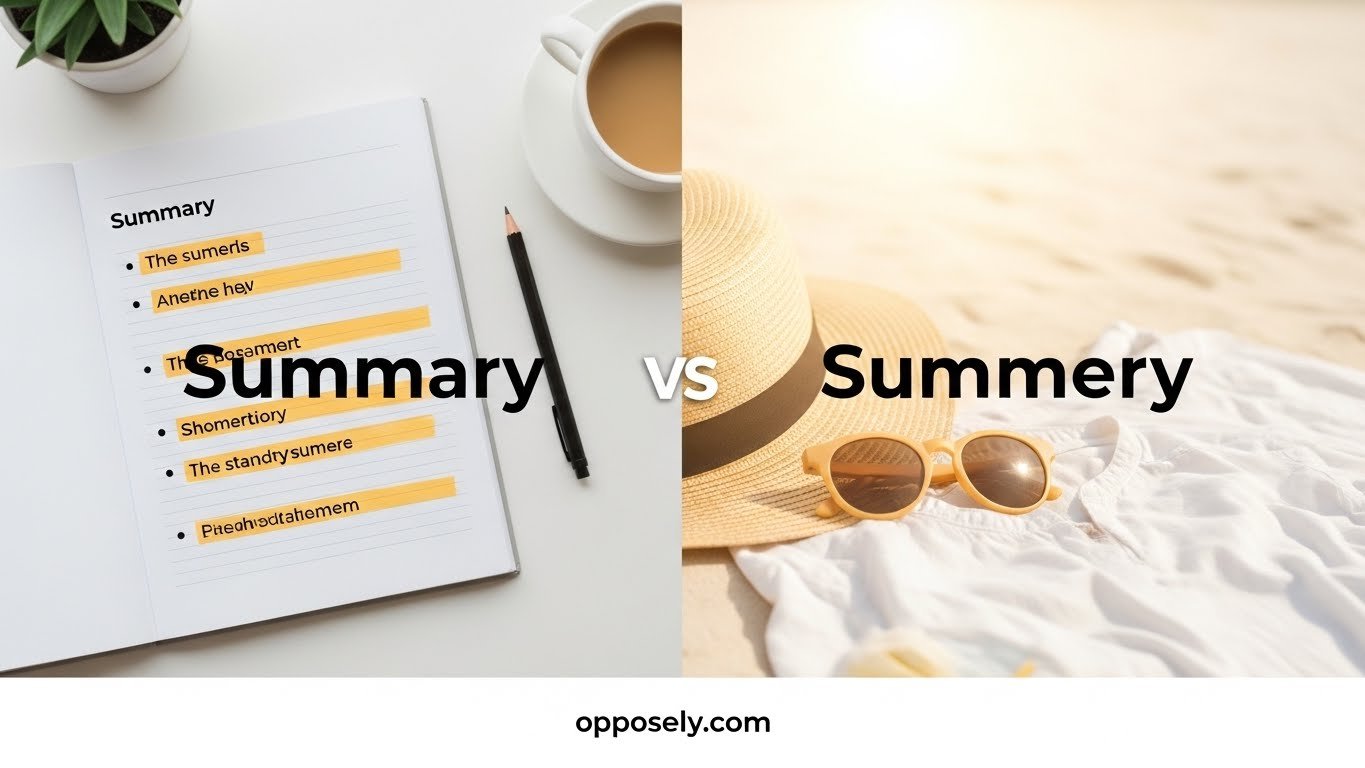
English words that look almost the same can cause confusion, especially when one letter changes the meaning. Summary or summery is a perfect example.
Many people write summery when they mean summary, and this small mistake can change a sentence or make writing look careless.
People often search for “summery or summary” when writing emails, reports, blogs, or assignments because they want a quick, clear answer.
This article explains the correct meanings, shows real examples, and helps you avoid common mistakes so you can use summary and summery confidently.
Summary or Summery: Quick Answer
Both words are correct English words, but they do not mean the same thing.
- Summary means a short version of information.
- Summery means related to summer.
Examples:
- Please send me a summary of the report.
- She wore a light, summery dress.
Easy rule to remember:
- If you are talking about information, use summary.
- If you are talking about weather, clothes, or feelings, use summery.
Origin:
Understanding where words come from can make them easier to remember.
Origin of Summary
The word summary comes from the Latin word summarium, which means a brief account or overview. From the beginning, this word was connected to the idea of shortening information. That meaning has stayed the same for centuries.
Origin of Summery
The word summery comes from the word summer, which refers to the season. The -y ending is added to describe something that feels, looks, or reminds us of summer. For example, sunny → sunny, cloud → cloudy, summer → summery.
Why the confusion exists
Both words:
- Look very similar
- Sound similar when spoken fast
- Are spelled correctly
Because of this, many writers type the wrong one without noticing.
British English vs American English Spelling
There is no difference between British English and American English for these words.
| Word | British English | American English |
|---|---|---|
| summary | summary | summary |
| summery | summery | summery |
The confusion has nothing to do with region. It is about meaning only.
Which Spelling Should You Use?
Choosing the correct word is easy when you think about context.
Use summary when:
- Talking about documents
- Referring to reports or articles
- Explaining key points briefly
- Writing emails, blogs, or academic work
Examples:
- The teacher asked for a summary of the chapter.
- The report includes a short summary at the end.
Use summery when:
- Describing weather
- Talking about clothes or fashion
- Describing a mood or feeling
- Writing creatively or casually
Examples:
- The room felt bright and summery.
- She chose a summery color palette.
Helpful tip
If your sentence involves thinking, reading, or explaining, choose summary.
If it involves sun, warmth, or style, choose summery.
Common Mistakes:
Here are the most frequent errors writers make:
1. Using summery instead of summary
❌ Here is a brief summery of the article.
✅ Here is a brief summary of the article.
2. Trusting spellcheck too much
Spellcheck tools often do not catch this error because both words are correct.
3. Typing too fast
Writers sometimes type summery by habit because it looks similar and sounds right.
4. Confusing pronunciation
When spoken quickly, the difference is subtle, which leads to spelling mistakes in writing.
Everyday Examples:
Seeing words in real-life use makes them easier to remember.
Emails
- Please send me a summary of today’s meeting.
- The manager asked for a project summary.
News
- The article provided a clear summary of events.
- A short summary appears at the top of the report.
Social Media
- Loving this summery vibe today ☀️
- These colors feel so summery and fresh.
Formal Writing
- The executive summary outlines key findings.
- A concise summary helps readers understand faster.
Google Trends & Usage Data
Search trends show that summary is used far more often than summery. This is because summary appears frequently in:
- Education
- Business
- Blogging
- Online content
- Academic writing
Summery appears less often and mostly in:
- Fashion writing
- Travel blogs
- Lifestyle content
- Weather descriptions
Many Google searches happen because writers:
- Accidentally use the wrong word
- Notice something feels “off”
- Want confirmation before publishing
This shows strong user intent for quick clarification.
Comparison Table:
| Word | Meaning | Correct Use |
|---|---|---|
| summary | short explanation | reports, articles, emails |
| summery | summer-like | weather, clothing, mood |
FAQs:
Is summery ever correct?
Yes. It is correct when describing something related to summer.
Is summary a noun or adjective?
It is mainly a noun, but it can also act as an adjective in phrases like summary report.
Can I use summery in formal writing?
Yes, but only when describing summer-related qualities.
Do summary and summery sound the same?
They sound similar, but their meanings are very different.
Which word is more common?
Summary is much more common.
Can spellcheck detect the mistake?
Often no, because both words are correct.
Conclusion
The confusion between summary or summery is easy to make, but also easy to fix once you understand the difference. Summary is about information, explanations, and key points. Summery is about feelings, style, weather, and the season of summer.
Using the wrong word can confuse readers and reduce trust, especially in professional, academic, or business writing. A simple spelling mistake can make good writing look careless. That’s why learning the difference matters.
Remember this simple rule:
Summary = short explanation
Summery = summer-like feeling
Once you keep this in mind, you will never mix them up again. For more clear, simple, and practical word comparisons, visit opposely.com and keep improving your English with confidence.
Read More:
Tuesdays or Tuesday’s: Common Apostrophe Mistakes
Matt or Mat: Meaning, Examples, and Usage Tips