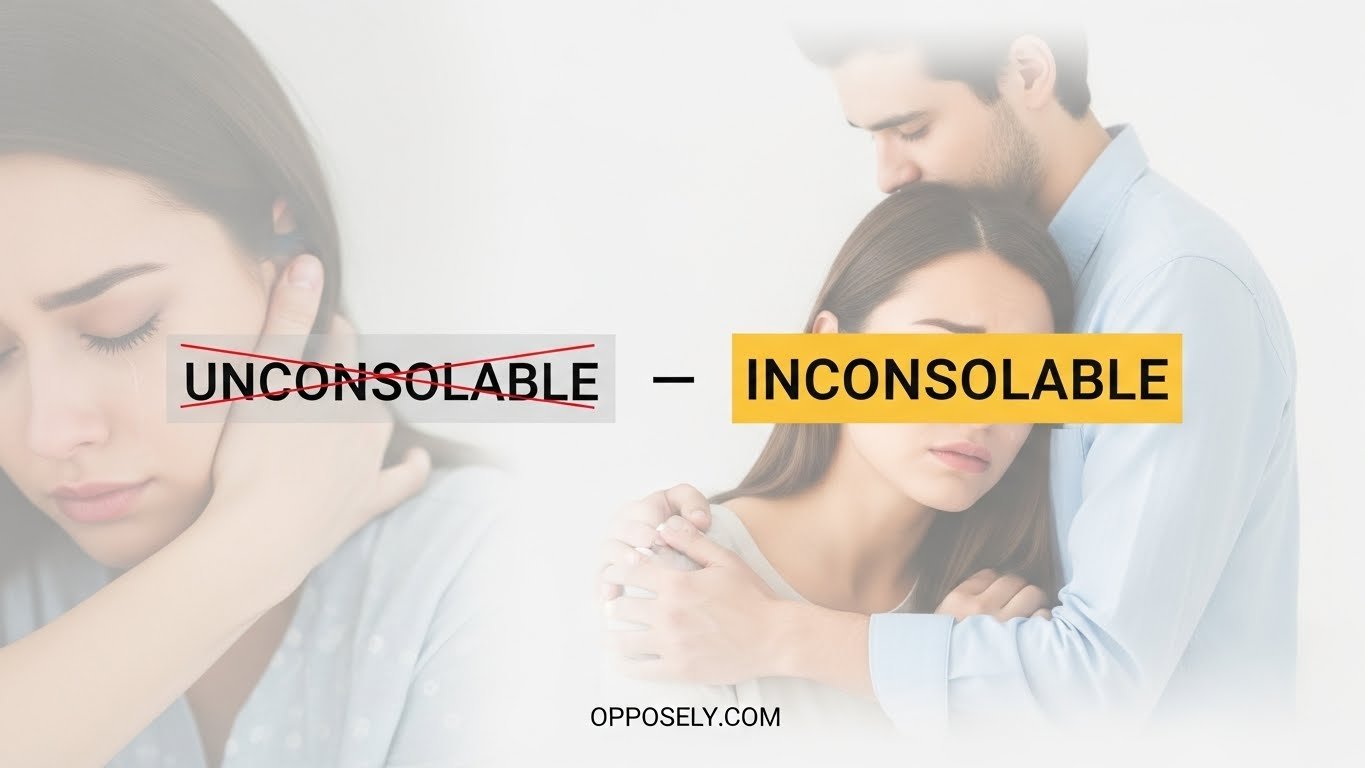
Have you ever wondered whether to write unconsolable or inconsolable? You are not alone. Many English learners get confused by these two spellings.
Both look similar, but only one is correct in standard English. The confusion comes from prefixes like un- and in-, which change meanings in some words.
This article explains the difference simply and clearly. By the end, you’ll know exactly which spelling to use confidently.
Unconsolable or Inconsolable: Quick Answer
The correct spelling is inconsolable.
The spelling unconsolable is incorrect and not accepted in standard English.
Examples:
- She was inconsolable after hearing the bad news.
- The child became inconsolable when his favorite toy broke.
- After the loss, the family remained inconsolable for days.
In short, inconsolable is the spelling you should always use, especially in formal writing, professional content, or educational materials.
The Origin of Unconsolable or Inconsolable
To fully understand this word, it helps to know its history. The correct form, inconsolable, comes from Latin roots. The Latin verb consolari means “to comfort,” and the prefix in- means “not.”
So, when you combine in + consolable, it literally means not able to be comforted.
You might wonder why people sometimes write “unconsolable.” The answer lies in how English has evolved. Many negative words in English use the prefix un-, such as unhappy, unfair, or unbelievable. Because of this pattern, it feels natural for writers to type unconsolable, even though historically and grammatically, only inconsolable is correct.
Over time, this mistake became common in casual writing, but dictionaries, grammar guides, and professional editors all agree that inconsolable is the standard form.
British English vs American English Spelling
One good thing about this word is that there is no regional spelling difference.
| Aspect | British English | American English |
|---|---|---|
| Correct spelling | inconsolable | inconsolable |
| Alternative form | not used | not used |
| Meaning | unable to be comforted | unable to be comforted |
Unlike words such as “organising” or “organizing,” both British and American English always use inconsolable. This makes it easier to remember and ensures your writing is correct no matter where your audience is.
Which Spelling Should You Use?
The choice here is simple: use inconsolable everywhere.
- US audience: inconsolable
- UK audience: inconsolable
- International or global writing: inconsolable
Using unconsolable may look unprofessional or incorrect, especially in academic essays, business writing, blogs, or SEO-focused content. Even though some people still type it casually, it is better to rely on inconsolable to maintain credibility.
Common Mistakes with Unconsolable or Inconsolable
Even experienced writers sometimes make mistakes with this word. Here are the most common ones:
- Assuming “un-” works like other English words
- Wrong: She was unconsolable after the loss.
- Right: She was inconsolable after the loss.
- Relying on spellcheck alone
Spellcheck might not always catch errors if the wrong form appears in casual typing or older documents. - Confusing it with similar emotional words
People sometimes confuse inconsolable with words like upset, sad, or distressed, but inconsolable implies extreme and unrelenting grief or sorrow. - Mixing forms in one text
- Wrong: She was unconsolable and became inconsolable over time.
- Right: She was inconsolable from start to finish.
Remember, the key rule is simple: in- is the correct prefix here, not un-.
Unconsolable or Inconsolable in Everyday Examples
Let’s look at how you can use inconsolable naturally in different contexts:
Emails
- “I’m so sorry for your loss. She must be inconsolable.”
- “After the meeting, he remained inconsolable despite our reassurances.”
News Headlines
- “The fans were inconsolable after the team lost the final match.”
- “Residents remain inconsolable following the unexpected disaster.”
Social Media
- “Still inconsolable after watching that heartbreaking movie 😢”
- “The puppy’s passing left the family inconsolable.”
Formal Writing
- “The patient was inconsolable despite all attempts at comfort.”
- “Researchers noted inconsolable grief among the affected population.”
Notice how inconsolable works across all types of writing—formal, casual, professional, or social.
Unconsolable or Inconsolable: Google Trends & Usage Data
Search data shows that people often type unconsolable or inconsolable when they want a quick answer about spelling.
- Inconsolable dominates searches, appearing in books, news articles, academic texts, and professional writing.
- Unconsolable appears mostly in informal typing, drafts, or casual messages.
- Both British and American English recognize inconsolable, making it the safest choice for global content.
For SEO and content writing, using inconsolable improves credibility and ensures that readers and search engines recognize the correct form.
Comparison Table: Spelling Variations
| Word | Correct | Usage |
|---|---|---|
| inconsolable | ✅ Yes | Standard English, formal and informal writing |
| unconsolable | ❌ No | Common spelling mistake, informal |
FAQs
1. Is unconsolable ever correct?
No, unconsolable is not accepted in standard English.
2. Why do people write unconsolable?
Because many English words use un- as a negative prefix, which causes confusion.
3. Is inconsolable formal or informal?
It works in both formal and informal writing.
4. Do British and American English differ here?
No, both always use inconsolable.
5. Can I use inconsolable for emotions only?
Mostly yes, but it can describe any state of deep distress.
6. How can I remember the correct spelling?
Think of the Latin root consolari with the prefix in-, meaning not able to be comforted.
7. Will using unconsolable affect my writing credibility?
Yes, especially in professional, academic, or published content.
Conclusion
The confusion between unconsolable or inconsolable is common, but the solution is simple. Inconsolable is the only correct spelling. It has a clear Latin origin and is used consistently in both British and American English.
Using unconsolable might seem like a small mistake, but it can affect your credibility, clarity, and professionalism. Whether you’re writing emails, essays, social media posts, or formal content, remembering that in- is the correct prefix ensures your writing is polished and correct.
Next time you want to describe someone who cannot be comforted, simply choose inconsolable without hesitation, and your readers will instantly recognize your writing as confident and accurate.
Read More:
Creat or Create? Stop Making This Common Mistake
Envelope or Envelop: Stop Making This Mistake
Licensed or Licenced? Know the Correct Spelling