English spelling often changes depending on where you are in the world, and this can confuse even confident writers. One common question people search online is “worshipers or worshippers.”
Both spellings look correct, both appear in writing, and both seem to mean the same thing. So why does this confusion exist?
The issue usually comes from differences between American English and British English spelling rules, especially when adding endings like -er or -or to verbs.
People want to know which spelling is correct, which one looks professional, and which one they should use in emails, religious writing, blogs, or academic work.
This article solves that confusion clearly and simply. You’ll get a quick answer, learn the spelling rules behind both versions, see real-life examples, and understand which form is best for your audience.
By the end, you’ll be confident using the right spelling every time.
Worshipers or Worshippers: Quick Answer
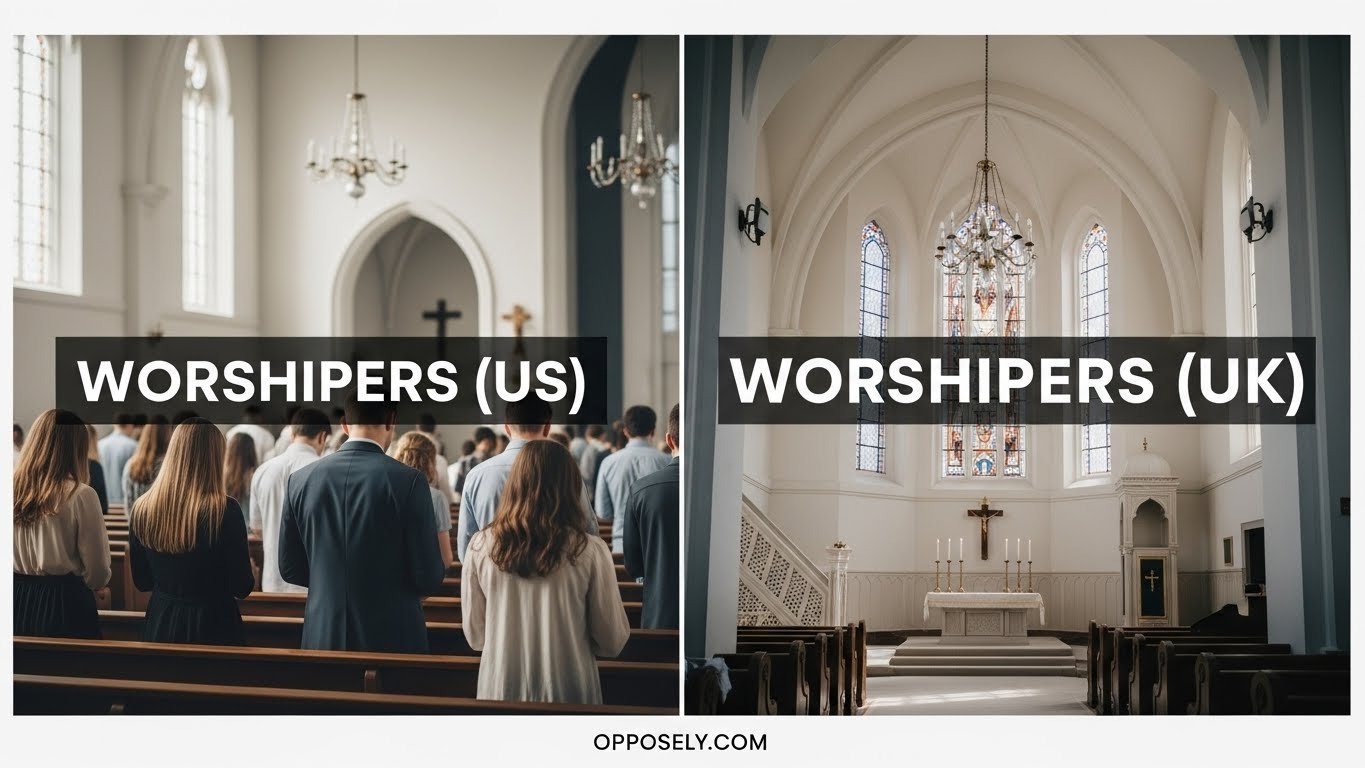
Both spellings are correct, but usage depends on location.
Worshipers is American English.
Worshippers is British English.
Examples:
The church was filled with worshipers.
Thousands of worshippers gathered at the temple.
The Origin of Worshipers or Worshippers
The word worship comes from Old English weorðscipe, meaning honor or reverence. Over time, it became the verb worship, meaning to show deep respect or devotion, especially in a religious sense.
When English forms nouns from verbs by adding -er, spelling rules apply. In British English, consonants are often doubled before adding -er when the stress falls on the final syllable. In American English, this doubling is often avoided.
That’s why both worshipers and worshippers exist and are accepted.
British English vs American English Spelling
| Feature | American English | British English |
|---|---|---|
| Correct spelling | worshipers | worshippers |
| Double “p” used | No | Yes |
| Common regions | USA | UK, Australia, Canada |
Both spellings mean the same thing and are grammatically correct in their respective regions.
Which Spelling Should You Use?
Choose the spelling based on your audience.
US audience: worshipers
UK or Commonwealth audience: worshippers
Global or mixed audience: either is acceptable, but be consistent
For SEO and professional writing, consistency matters more than the spelling itself.
Common Mistakes:
One common mistake is mixing both spellings in the same article.
Another mistake is thinking one version is wrong—it isn’t.
Some writers also assume spellcheck errors without checking regional settings.
Correction tip:
Pick one spelling and stick to it throughout your content.
Everyday Examples
Emails:
The hall will be open for worshipers at dawn.
News:
Thousands of worshippers attended the annual ceremony.
Social media:
So grateful to stand among fellow worshipers today 🙏
Formal writing:
The site attracts millions of worshippers each year.
Worshipers or Worshippers: Google Trends & Usage Data
Search trends show that “worshipers” is more common in the United States, while “worshippers” dominates searches in the UK and other Commonwealth countries. Both forms appear frequently in religious texts, news articles, and academic writing.
This proves that neither spelling is outdated or incorrect—it’s purely regional.
Comparison Table: Spelling Variations
| Spelling | Region | Correct |
|---|---|---|
| worshipers | American English | Yes |
| worshippers | British English | Yes |
FAQs:
Are worshipers and worshippers the same word?
Yes, they have the same meaning.
Is worshippers incorrect in American English?
It’s not wrong, but worshipers is preferred.
Which spelling is better for SEO?
Use the one your target audience searches for.
Do religious texts use both spellings?
Yes, depending on regional editions.
Can I mix both spellings?
No, always stay consistent.
Conclusion
The confusion between worshipers or worshippers comes down to regional spelling rules, not correctness. Both words are valid, meaningful, and widely used. The key is knowing your audience and staying consistent throughout your writing.
If you’re writing for an American audience, worshipers will feel natural and familiar. For British or international readers, worshippers fits perfectly. Understanding this difference helps you write more confidently and professionally, especially in religious, academic, or formal contexts.
For more simple and clear word comparisons, visit opposely.com and keep improving your English with confidence.
Read More:
Inroute or Enroute: Meaning, Origin, and Everyday Examples
Binded or Bound: History, Rules, and Easy Examples
Until or Untill: Grammar Rules and Examples

I am Helen Oyeyemi, an English writer who focuses on clear, simple, and engaging content.
I enjoy explaining confusing words and everyday topics in a reader-friendly way.
My writing aims to inform, connect, and make learning easy for all readers.